
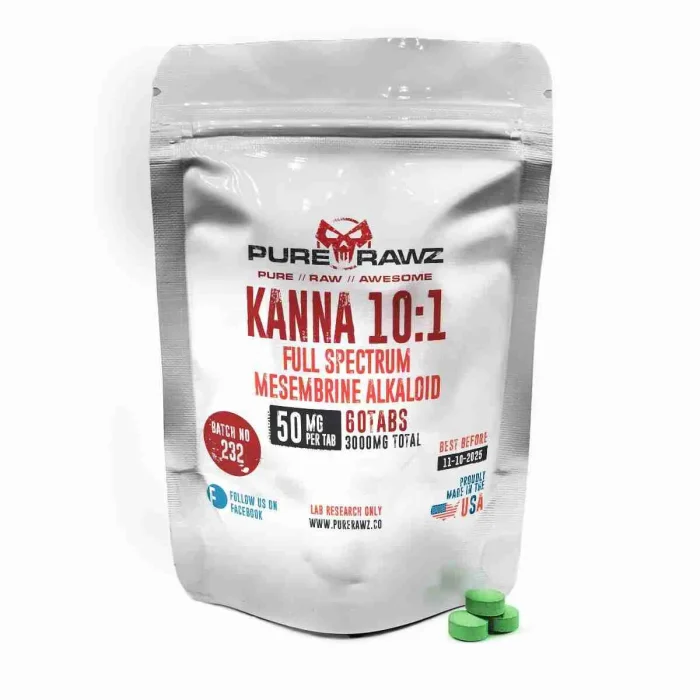
Kanna – Product Information
Kanna, sceletium tortuosum, is a succulent natural plant indigenous to South Africa. The nature-grown herb is said to have various properties and has been studied for millennia as a kind of traditional medicine.
Kanna research may help provide specific health benefits, such as reducing common ailments like pain, hunger, and thirst. It may potentially have some psychological impacts as well. The plant is also studied for its believed potential to alleviate anxiety, tension, and insomnia and may even promote a good sense of focus in subjects.
| Kanna 200:1 | |
| CAS Number | 468-54-2 |
| Molar Mass | CFN92850 |
| Chemical Formula | C17H21NO3 |
| IUPAC Name | 2-[(6S)-6-(3,4-dimethoxyphenyl)-7,8-dihydro-5H-quinolin-6-yl]-N-methylethanamine |
What is Kanna?
Kanna (also known as Kougoed or Sceletium) is a succulent plant native to South Africa that has been studied for millennia to improve mood. Several alkaloids in sceletium, including mesembrine, mesembrenone, and tortuosamine, is being studied for its potential to interact with the brain’s dopamine and serotonin receptors to potentially elevate mood. Mesembrine is a significant alkaloid found in Sceletium. Mesembrine has been shown to be an potentially effective serotonin-uptake inhibitor (SRI).
SRIs are commonly used as antidepressants because they boost extracellular serotonin concentrations (the “happy hormone”).
Research shows Kanna produces a potential buzzy euphoric high that gradually fades into relaxation. When brewed as a tea, it may potentially improve mood and relieve tension and anxiety. Anecdotal evidence suggests that it can enhance the effects of other narcotics.
Pure Rawz sells Kanna for research purposes only and not for human consumption.
Possible Applications of Kanna Extract
In recent years, multiple case studies have been conducted on Kanna. This medicinal plant has also attracted a few animal studies and clinical trials. They have shown that Kanna may possess anxiolytic, anti-inflammatory, and antidepressant properties.
However, in the evidence of large-scale, randomized clinical trials, the FDA hasn’t approved Kanna for any medical condition (or for internal or external use).
Kanna and Mood
A double-blind, placebo-controlled study was conducted to study the effects of Kanna on anxiety-related activity in the amygdala. It was shown that when compared with placebo administration, Kanna reduced anxiety-related amygdala reactivity. [R]
In another randomized, double-blind, placebo-controlled trial, several patients taking Kanna reported feeling better in general, coping better with stressful situations, and sleeping better at night.
Moreover, in a separate clinical trial, positive changes in mood and sleep were found. [R] [R]
Kanna and Pain Relief
In a rat study, mesembrine (Kanna extract) demonstrated analgesic properties without abuse liabilities. That mesembrine has analgesic activity isn’t surprising, given it has shown activity at δ2- and m- opioid receptors; agonists at these sites show analgesic effects. [R]
These findings suggest that mesembrine may be a useful analgesic.
Kanna and Inflammation & Depression
Recent evidence suggests that inflammation may contribute to many psychiatric disorders, particularly depression. Also, chronic exposure to increased inflammation is thought to drive changes in the brain that lead to depressive symptoms. [R]
An in vitro study was carried out to investigate the immunomodulatory effects of Kanna. The findings indicate that Kanna may treat systemic low-grade inflammation and might benefit the attenuation of cytokine-induced depression. [R]
Kanna and Cognition
A 2014 study investigated the neurocognitive effects of Kanna extract (Zembrin) on everyday healthy people. The study’s subjects were randomized to receive either a 25mg capsule of Zembrin or a placebo capsule once daily for three weeks. [R]
Results from the study demonstrate that Zembrin at a 25mg daily dosage significantly improved cognitive set flexibility. Positive changes in mood and sleep were also found.
How does Kanna Work?
While its exact mechanism of action remains unknown, it has been reported that Kanna influences the amygdala (the region of the brain whose main function is regulating emotions) and inhibits the serotonin hormone as well as the phosphodiesterase 4 (PDE4) enzyme. [R]
Disclaimer
Related Research Compounds for Kanna
If you’re looking to buy Kanna, you may also be interested in other nootropic compounds, mood-support research products, and neurochemical pathway compounds used in laboratory studies involving stress response, cognitive balance, neurotransmitter regulation, and emotional wellness research.
Inbound Internal Links
- Buy Semax – Popular nootropic peptide for cognitive and neurochemical pathway studies.
- Buy Kava Extract 70% Kavalactones – Relaxation and mood support botanical research compound.
- Buy MK-677 – Recovery and sleep-support research compound.
- Buy Sermorelin – Growth hormone pathway research with restorative applications.
- Buy CJC-1295 – GH-related peptide for recovery and wellness studies.
Outbound Internal Links
- Ipamorelin for Sale – Recovery and restorative pathway research compound.
- BPC-157 for Sale – Recovery peptide for tissue repair and wellness studies.
- TB-500 for Sale – Regeneration peptide for advanced healing research.
- Buy Semaglutide – Metabolic peptide for appetite and regulation studies.
- Tirzepatide for Sale – Advanced metabolic research peptide.
External Authority Links
- PubChem – Scientific compound reference database.
- NCBI – Peer-reviewed biomedical research studies.
- ClinicalTrials.gov – Registered clinical and research studies.



Reviews
There are no reviews yet.