
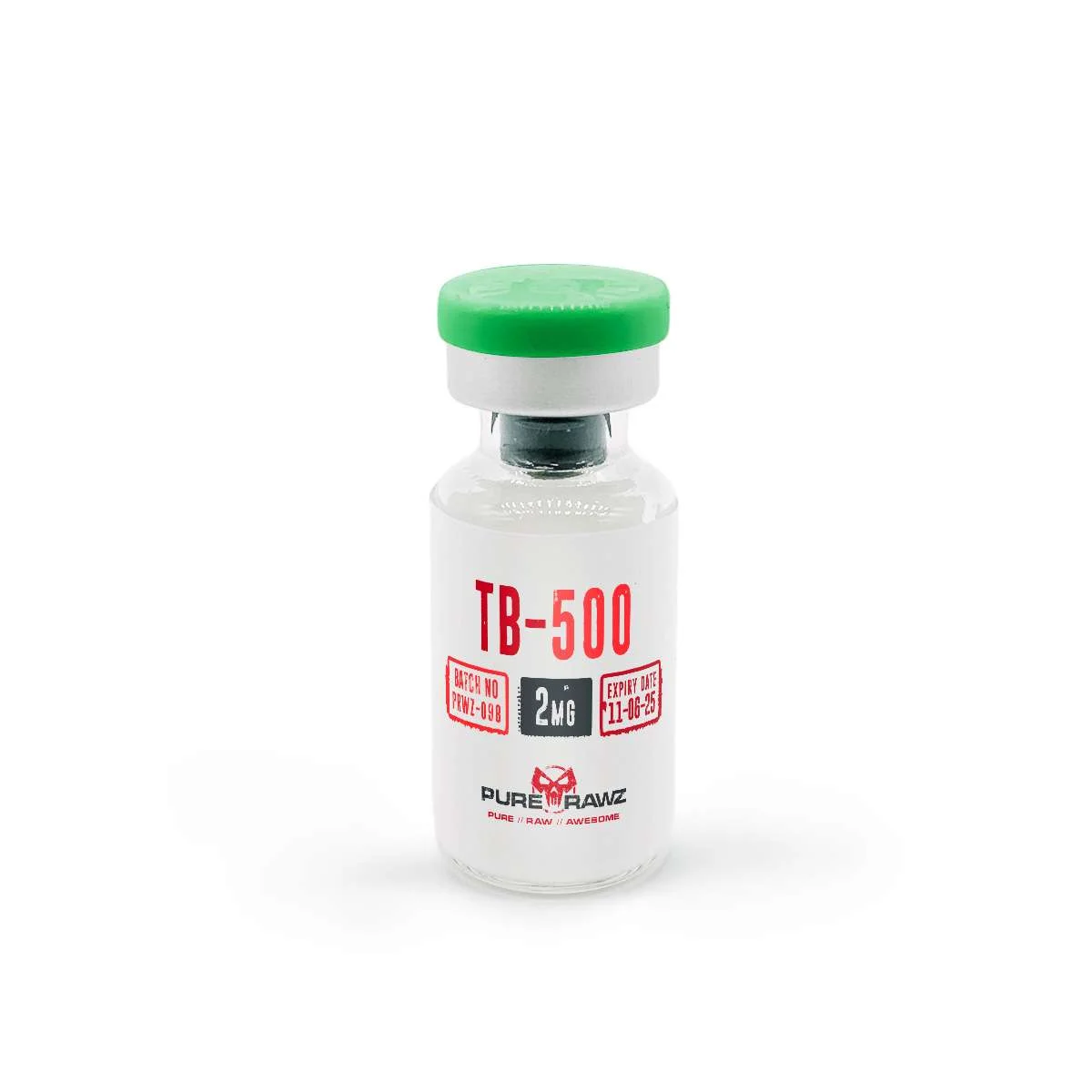
TB-500 for Sale — Buy TB-500 Research Peptide, 99% Purity, COA Verified (2026)
Researchers looking for TB-500 for sale in 2026 are operating in a market where quality variation is wider than at any prior point. TB-500 — the synthetic fragment of the endogenous protein Thymosin Beta-4 — is one of the most extensively researched tissue repair and actin-binding peptides available for laboratory investigation. OfficialPureRawz supplies TB-500 as a research-grade lyophilized powder verified at 99% purity by independent third-party HPLC and Mass Spectrometry, with a batch-specific Certificate of Analysis published directly on the product page. For laboratory research purposes only. Free shipping on all orders over $100.
What Is TB-500?
TB-500 is a synthetic peptide fragment corresponding to amino acids 17–23 of Thymosin Beta-4 (Tβ4) — an endogenous 43-amino-acid protein expressed ubiquitously in mammalian cells and found at particularly high concentrations in wound fluid, platelets, and regenerating tissues. The active sequence Ac-LKKTETQ represents the actin-binding domain responsible for the majority of Tβ4’s documented biological effects. TB-500 was developed as a research tool to study this specific bioactive region in isolation without the synthesis complexity of the full-length protein.
Thymosin Beta-4 was originally identified as a thymic hormone with immune-regulatory properties, but decades of subsequent research have established its primary role in actin cytoskeleton regulation, cell motility, angiogenesis, and wound healing signaling. As the synthetic fragment of this protein, TB-500 enables laboratory investigation of these pathways with a peptide that is substantially more accessible to synthesize and analyze than the complete 43-residue parent molecule. The CAS registry number for TB-500 is 77591-33-4, with a molecular formula of C₃₅H₆₂N₁₀O₁₄ and a molecular weight of approximately 902.9 g/mol.
Key Molecular Properties
| Property | Value |
|---|---|
| Common Name | TB-500 |
| Full Name | Thymosin Beta-4 Fragment (17–23) |
| Active Sequence | Ac-LKKTETQ (N-terminally acetylated) |
| CAS Number | 77591-33-4 |
| Molecular Formula | C₃₅H₆₂N₁₀O₁₄ |
| Molecular Weight | ~902.9 g/mol |
| PubChem CID | 16132341 |
| Parent Protein | Thymosin Beta-4 (Tβ4), 43 amino acids |
| Primary Mechanism | Actin sequestration, G-actin binding |
| Research Form | Lyophilized powder |
| Our Purity Standard | ≥99% (HPLC + Mass Spectrometry verified) |
Why Buy TB-500 From OfficialPureRawz
The decision of where to source TB-500 for research matters more in 2026 than at any prior point. Several major research peptide vendors have exited the market — including Peptide Sciences, which ceased operations in March 2026 — creating demand concentration among fewer active suppliers and widening the quality gap between legitimate research-grade sources and opportunistic inferior suppliers entering the consolidated market.
Independent Third-Party COA — Not In-House Testing
Every batch of TB-500 at OfficialPureRawz is verified by an independent third-party analytical laboratory using HPLC for purity quantification and Mass Spectrometry for molecular identity confirmation against the known CAS 77591-33-4 molecular fingerprint and the verified sequence Ac-LKKTETQ. The COA is batch-specific and published directly on the product page — accessible before purchase, not available only on request. The distinction between in-house testing and genuine independent third-party verification is the most consequential quality signal when evaluating where to buy TB-500.
99% Purity — Batch-Specific Documentation
OfficialPureRawz maintains a minimum verified purity of 99% for TB-500 across every production batch. Although TB-500’s molecular weight (~902.9 g/mol) is smaller than complex large peptides like semaglutide, synthesis of the N-terminally acetylated heptapeptide with the correct sequence and acetylation status still requires rigorous analytical confirmation. Our 99% threshold is documented on a per-batch basis — not a catalog-level claim applied uniformly regardless of actual test results.
USA-Based Manufacturing
TB-500 from OfficialPureRawz is manufactured at our documented Knoxville, Tennessee facility. Domestic synthesis under controlled conditions provides supply chain integrity and eliminates the quality unpredictability associated with imported bulk peptide APIs. For a peptide with as broad a research market as TB-500, domestic manufacturing provenance is a meaningful quality differentiator in a market where a significant proportion of cheap TB-500 offerings trace to overseas bulk suppliers with unverifiable synthesis standards.
Nine Years of Documented Operation
OfficialPureRawz has operated continuously since 2017. In 2026 — when vendor closures are accelerating and new low-quality operators are entering the consolidated market — a nine-year operational history backed by documented fulfillment, accessible customer service by phone and email, and consistent COA standards provides the most meaningful external legitimacy signal available to researchers procuring TB-500.
Legal Status: TB-500 for Sale in 2026
TB-500 occupies a cleaner legal position than some other research peptides — it is not an FDA-approved pharmaceutical with a competing prescription market — but researchers who want to purchase TB-500 in 2026 still need an accurate picture of the regulatory landscape before transacting.
Research Peptide Framework
TB-500 is not FDA-approved for any therapeutic use in humans or animals in the United States. It has no pharmaceutical brand name and no associated prescription drug market. Research peptide vendors sell TB-500 under the standard research compound framework: designated “for laboratory research use only” and “not for human consumption.” This research-only designation is both the legal basis for vendor sales and the factual description of the appropriate use context. OfficialPureRawz operates within this framework for all TB-500 listings.
World Anti-Doping Agency (WADA) Classification
TB-500 and Thymosin Beta-4 are classified as prohibited substances under the WADA Prohibited List in the category of Peptide Hormones, Growth Factors, Related Substances and Mimetics (S2). This prohibition applies to competitive athletes subject to anti-doping rules and is relevant context for researchers studying the compound. The WADA prohibition does not affect the legal status of TB-500 as a research compound — it applies specifically to athletic competition contexts, not to laboratory investigation. However, researchers should be aware of this classification when designing studies and communicating research context.
Research Vendor Market Position in 2026
Unlike semaglutide — which is subject to active pharmaceutical patent enforcement by Novo Nordisk in 2026 — TB-500 does not face an equivalent branded pharmaceutical enforcement pressure. The primary regulatory risk for TB-500 vendors comes from making therapeutic or health benefit claims rather than from pharmaceutical patent conflicts. Vendors who market TB-500 with explicit tissue repair, injury recovery, or performance enhancement claims directed at human use are operating outside the appropriate legal framework for research peptide sales. OfficialPureRawz maintains research-only positioning across all TB-500 product pages and marketing materials.
TB-500 Research: Thymosin Beta-4 Pathway Overview
To understand the research value of TB-500, a clear picture of Thymosin Beta-4 biology and the specific mechanisms attributable to the TB-500 fragment is essential for researchers evaluating where to focus laboratory investigation.
Thymosin Beta-4 Biology
Thymosin Beta-4 is a member of the beta-thymosin family — a group of small actin-monomer-sequestering proteins that regulate the availability of monomeric (G-actin) versus filamentous (F-actin) actin within cells. As the most abundant member of this family in many cell types, Tβ4 plays a central role in the dynamic regulation of the actin cytoskeleton — a process essential to cell motility, division, morphology, and signaling. In the context of tissue injury, Tβ4 expression is upregulated and the protein is released into wound fluid, where it promotes cell migration, angiogenesis, and inflammatory resolution.
The TB-500 fragment — corresponding to the actin-binding domain of Tβ4 — is the minimal active sequence necessary to reproduce the G-actin sequestering activity and many of the downstream biological effects of the full-length protein. Research has documented that this 7-amino-acid sequence drives a significant proportion of the wound healing and cell migration activity observed with full Tβ4. The N-terminal acetylation (Ac-LKKTETQ) is essential for biological activity and must be confirmed in any TB-500 preparation used for research.
Mechanism of Action in Research Models
When researchers source TB-500 for laboratory investigation, they are working with a compound that engages the following documented pathways:
- G-actin sequestration: TB-500 binds monomeric actin (G-actin) with high affinity, modulating the ratio of polymerized to unpolymerized actin and directly affecting cytoskeletal dynamics in research cell models
- Cell migration promotion: By modulating actin dynamics, TB-500 facilitates the lamellipodia and filopodia formation required for directional cell movement — a primary focus of wound healing pathway research
- Angiogenesis stimulation: TB-500 has been shown in preclinical models to promote endothelial cell migration and new blood vessel formation — a mechanism studied in cardiovascular and wound healing research contexts
- Anti-inflammatory signaling: Research has documented Tβ4 and TB-500 effects on inflammatory pathway modulation, including effects on NF-κB signaling and cytokine expression in injury models
- Stem cell activation: Preclinical studies have investigated TB-500’s role in activating progenitor cell migration toward sites of tissue injury — a mechanism studied in cardiac and skeletal muscle research models
Key Research Areas for TB-500 in 2026
The research applications for TB-500 span multiple biological systems in which actin dynamics, cell migration, and tissue repair signaling play important roles. Below are the primary research domains in which TB-500 is actively investigated in 2026.
Wound Healing and Tissue Repair Research
The foundational and most extensively published research application for TB-500 is wound healing biology. Preclinical models have established TB-500’s capacity to accelerate wound closure through promotion of keratinocyte and endothelial cell migration, stimulation of new vessel formation, and modulation of the inflammatory phase of wound healing. Rodent wound closure models have documented significantly faster healing, increased collagen deposition, and improved angiogenesis in TB-500-treated groups compared to controls. These wound healing research applications are relevant to dermatological, surgical, and regenerative biology research programs.
Cardiac and Cardiovascular Research
Thymosin Beta-4 research has generated significant interest in cardiac biology. Studies in myocardial infarction models have documented Tβ4’s role in activating dormant epicardial progenitor cells — cells that can differentiate into cardiomyocytes and smooth muscle cells under specific stimulatory conditions. Research with TB-500 in cardiac injury models has investigated cardiomyocyte survival, reduction of apoptotic signaling post-ischemia, and potential for de novo cardiomyocyte generation from progenitor populations. These cardiac research applications make TB-500 a compound of interest for laboratories studying cardiac regeneration and cardiovascular repair biology.
Skeletal Muscle and Connective Tissue Research
TB-500 is studied in models of skeletal muscle injury, tendon repair, and connective tissue healing. Research has documented accelerated satellite cell activation, improved muscle fiber regeneration, and reduced fibrosis in muscle injury models treated with Tβ4 and TB-500. The peptide’s ability to promote cell migration is mechanistically relevant to the recruitment of satellite cells and fibroblasts to sites of muscle and tendon injury — making these tissue types primary research models for TB-500 activity studies.
Central Nervous System Research
GLP-1 receptors are expressed throughout the brain, and TB-500 research has extended into neurological models given Tβ4’s expression in neural tissue and its documented roles in oligodendrocyte differentiation and myelination. Preclinical studies have investigated TB-500 effects in traumatic brain injury models, spinal cord injury models, and models of demyelinating conditions. The actin regulatory role of TB-500 in neural cell migration and the inflammatory modulation documented in these models have attracted interest from neuroscience research laboratories.
Ocular Research
Tβ4 and TB-500 have been investigated in ocular surface biology, particularly for their roles in corneal wound healing, dry eye disease models, and retinal repair research. The corneal epithelium is among the most extensively studied tissues for Tβ4 activity, given its rapid cell turnover and the accessibility of topical delivery in research models. Pharmaceutical-grade Thymosin Beta-4 (RGN-259) has been studied in clinical trials for dry eye disease — generating parallel interest in TB-500 as a laboratory tool for investigating ocular surface biology.
Inflammation and Immunomodulation Research
Beyond its structural roles in actin dynamics, TB-500 is studied for its anti-inflammatory properties. Research has documented suppression of pro-inflammatory cytokine expression, modulation of macrophage polarization, and reduction of inflammatory tissue damage in models of acute and chronic inflammation. These immunomodulatory properties are a research focus distinct from the actin-binding mechanism and expand the laboratory applications of TB-500 to immunology and inflammatory disease model research.
How to Verify TB-500 Quality Before You Buy
TB-500 is among the most commonly counterfeited or underdosed research peptides due to its high search volume and broad research market. The following checklist covers every dimension a researcher should confirm before completing a TB-500 purchase from any vendor.
- Batch-specific COA published directly on the product page — accessible before purchase without contacting support
- Testing laboratory is a named, verifiable independent facility — not in-house
- COA confirms HPLC purity testing with result ≥99%
- COA confirms Mass Spectrometry identity confirmation against TB-500 CAS 77591-33-4 and MW ~902.9 g/mol
- COA confirms N-terminal acetylation (Ac-LKKTETQ) — critical for biological activity
- COA test date is within the last 12 months
- COA batch number matches the specific product being sold
- Vendor has verifiable US physical address
- Vendor maintains strict research-only marketing language — zero therapeutic or health benefit claims
- Vendor has been operating for 2+ years with documented history
- Multiple payment options available
- Customer support reachable by phone and email
- Product clearly labeled as lyophilized powder for research use only
Why N-Terminal Acetylation Verification Matters for TB-500
TB-500’s biological activity is dependent on the N-terminal acetyl group (Ac-) on the leucine residue. Non-acetylated LKKTETQ is a distinct molecule with substantially reduced actin-binding affinity and diminished biological activity in research models. Some lower-quality TB-500 preparations supply the non-acetylated form — which will not perform equivalently in research protocols. When reviewing a COA before purchasing TB-500, confirm that the Mass Spectrometry data reflects the acetylated form (Ac-LKKTETQ, MW ~902.9 g/mol) rather than the non-acetylated form (MW ~860.9 g/mol).
TB-500 Pricing: What Research-Grade Should Cost
TB-500 is priced lower than large complex peptides like semaglutide due to its smaller molecular size and simpler synthesis chemistry, but it is not among the cheapest research peptides — legitimate synthesis and independent analytical testing still have costs that set a floor below which credible quality cannot be maintained.
| Vial Size | Legitimate Price Range | Price Per mg | Notes |
|---|---|---|---|
| 2mg vial | $20 – $45 | $10 – $22/mg | Entry size for targeted research protocols |
| 5mg vial | $35 – $70 | $7 – $14/mg | Most common research size |
| 10mg vial | $60 – $110 | $6 – $11/mg | Best value for extended protocols |
| 20mg vial | $100 – $180 | $5 – $9/mg | Bulk research quantities |
| Below $3/mg | ⚠ Red Flag | Quality concern | Cannot support legitimate synthesis and testing costs |
OfficialPureRawz offers TB-500 starting at $34.99. Apply code BRAWN20 for 20% off, or SETH for up to 25% off. Free shipping on all orders over $100. Cryptocurrency payment receives an additional 15% discount.
Why Extremely Cheap TB-500 Is a Quality Risk
TB-500 is among the most searched research peptides online, making it a primary target for low-quality vendors seeking to capture search traffic with unverified products. Vendors pricing TB-500 at below-market rates are not absorbing a loss — they are compromising on synthesis quality, acetylation verification, analytical testing, or all three. Given that incorrect acetylation produces a molecule with substantially different biological activity, underpaying for TB-500 produces research data that may not replicate against literature standards and cannot be trusted as a reference for the intended research application.
Reconstitution and Storage After You Buy TB-500
Research TB-500 is supplied as lyophilized (freeze-dried) powder. Correct handling after purchase is essential for maintaining compound integrity and obtaining valid research outcomes.
Storage of Lyophilized TB-500
- Long-term storage: -20°C (standard freezer). Stable for up to 2 years when sealed, protected from light and humidity. Store in the original sealed vial until ready for reconstitution.
- Short-term storage: 4°C (refrigerator). Acceptable for up to 6 months when sealed. Appropriate for active research periods with planned use within that window.
- Light: Store away from direct light. Peptide degradation is accelerated by UV exposure, particularly affecting the acetyl group.
- Humidity: Keep in a dry environment. Even in sealed vials, compromised packaging permits moisture ingress that initiates hydrolytic degradation.
Reconstitution Protocol
TB-500 lyophilized powder must be reconstituted with bacteriostatic water (BAC water containing 0.9% benzyl alcohol) before use in liquid-phase research protocols.
- Allow the sealed TB-500 vial to equilibrate to room temperature before opening
- Clean the rubber stopper with 70% isopropyl alcohol and allow to dry completely
- Draw the desired volume of bacteriostatic water into a sterile syringe
- Insert the needle through the rubber stopper and inject BAC water slowly along the glass wall — not directly onto the lyophilized cake
- Do not shake vigorously — gently swirl or roll the vial until the powder is fully dissolved
- The reconstituted solution should be clear and colorless. Any turbidity or visible particulates indicate a problem with the preparation or the lyophilized product.
- Label the vial with the reconstitution date and store at 4°C
Post-Reconstitution Stability
Reconstituted TB-500 solution should be stored at 4°C (refrigerator) and used within 28 days of reconstitution. Never freeze reconstituted TB-500 solution — freeze-thaw cycles can denature the peptide and compromise acetylation integrity. For research protocols spanning longer than 28 days, lyophilize or prepare multiple separate vials rather than reconstituting a single large preparation at the study outset.
Red Flags When Buying TB-500 Online
TB-500 is one of the most commonly misrepresented research peptides in the online market due to its popularity and the difficulty of detecting quality issues without independent analytical testing. Apply these specific red flags before any TB-500 purchase.
Therapeutic, Performance, or Recovery Claims
Any vendor making explicit injury recovery, muscle repair, tendon healing, or performance enhancement claims about their TB-500 for sale is operating outside the appropriate legal framework for research compound sales. Legitimate research vendors make no therapeutic claims of any kind. This is especially important for TB-500 given the compound’s widespread non-research interest — vendors serving that market tend to use marketing language that disqualifies them as legitimate research sources and simultaneously indicates a higher regulatory compliance risk.
No Independent COA or Only In-House Testing
A significant portion of TB-500 vendors do not publish independent third-party COAs. For a peptide where acetylation status is biologically critical and cannot be detected by visual inspection, third-party Mass Spectrometry confirmation of the complete correct structure (Ac-LKKTETQ) is not an optional quality document — it is the only meaningful quality assurance available to a buyer. Never source TB-500 for research without a named independent laboratory COA confirming both identity and purity.
Failing to Confirm Acetylation
The COA for TB-500 should specifically confirm the N-terminally acetylated form (MW ~902.9 g/mol). Vendors whose COAs report a molecular weight of ~860.9 g/mol, or whose COAs do not specify the acetylation status, may be supplying non-acetylated LKKTETQ — a structurally different molecule with meaningfully different biological activity. This specific quality issue is unique to TB-500 among common research peptides and must be verified before purchasing.
Price Significantly Below Market
As discussed in the pricing section, TB-500 priced substantially below the legitimate market range indicates quality compromise in synthesis, testing, or both. The high search volume for TB-500 makes it a primary target for opportunistic vendors offering low-price products that cannot be produced at research-grade quality at those price points.
Absent or Generic Legal Disclaimers
Every legitimate TB-500 listing should prominently state: “For research use only. Not for human or animal consumption. Not FDA-approved. Not a dietary supplement.” Generic, minimal, or absent disclaimers are a signal that the vendor is not operating under an appropriate research compound framework.
TB-500 vs Other Tissue Repair Research Peptides
Researchers studying tissue repair, wound healing, and regenerative biology have multiple compound options available. Understanding where TB-500 sits relative to other research tools helps inform protocol design and compound selection decisions.
| Compound | Primary Mechanism | Key Research Areas | Half-Life | Available at OfficialPureRawz |
|---|---|---|---|---|
| TB-500 | Actin sequestration, cell migration | Wound healing, cardiac, musculoskeletal, CNS | ~hours (in vivo) | ✓ Yes |
| BPC-157 | Growth factor modulation, angiogenesis | GI repair, tendon, bone, CNS, wound healing | ~hours (in vivo) | ✓ Yes |
| GHK-Cu | Copper chelation, collagen synthesis | Skin repair, anti-inflammatory, wound healing | Short | ✓ Yes |
| Epithalon | Telomerase activation | Aging research, longevity biology, circadian rhythm | Short | ✓ Yes |
| Ipamorelin | GH secretagogue (GHRP) | Growth hormone axis, body composition research | ~2 hours | ✓ Yes |
TB-500 vs BPC-157 for Research
TB-500 and BPC-157 are the two most commonly studied tissue repair peptides, and they are frequently paired in research protocols investigating synergistic effects on wound healing and musculoskeletal repair. The mechanisms are distinct: TB-500 acts primarily through actin cytoskeleton regulation and cell migration, while BPC-157 (Body Protection Compound 157) is a pentadecapeptide derived from gastric juice that acts through growth factor receptor modulation, angiogenesis, and nitric oxide pathway effects. For research specifically studying actin dynamics and Tβ4-dependent mechanisms, TB-500 is the targeted tool compound. For comparative or combination protocol research examining multiple tissue repair pathways, both compounds are relevant and available at OfficialPureRawz.
TB-500 vs GHK-Cu for Research
GHK-Cu (copper peptide GHK) acts through a distinct mechanism — copper chelation and collagen-stimulating gene expression modulation — compared to TB-500’s actin-binding mechanism. Research groups focused on extracellular matrix remodeling and collagen biology tend to use GHK-Cu as the primary tool compound; those focused on cell migration and actin dynamics use TB-500. There is modest mechanistic overlap in wound healing endpoints, making comparative research between these compounds a relevant design for regenerative biology laboratories.
TB-500 Supply Landscape in 2026
The research peptide market environment for TB-500 in 2026 has been shaped by the same vendor consolidation forces affecting the broader research compound market, with some TB-500-specific dynamics worth understanding before making a sourcing decision.
Vendor Market Consolidation
The closure of Peptide Sciences in March 2026 removed one of the highest-traffic US research peptide suppliers from the market. TB-500 was among the highest-volume products at that vendor, meaning a substantial proportion of its research procurement demand is now redirected to remaining active suppliers. This demand concentration has two effects: it places quality-maintenance pressure on remaining vendors handling increased order volumes, and it creates an attractive entry opportunity for low-quality operators seeking to capture displaced demand. Independent COA verification is the primary protection against the latter dynamic.
WADA Prohibition — Practical Research Context
TB-500’s WADA prohibited substance classification creates a distinct market dynamic compared to peptides without sports anti-doping implications. Research groups studying TB-500 in contexts adjacent to sport science or exercise physiology should ensure their institutional procurement and research designation documentation is clear. The WADA prohibition applies exclusively to athletic competition and does not restrict laboratory investigation — but it affects the public discourse and search-intent context around TB-500 in ways that can attract less legitimate vendors targeting non-research buyers.
Research Demand Remains Active
Despite market consolidation, legitimate laboratory demand for TB-500 is active and growing in 2026 — driven by expanding research interest in the cardiac progenitor, neurological, and ocular applications of Tβ4 biology described earlier in this guide. OfficialPureRawz maintains TB-500 stock with reliable availability for research procurement, with consistent batch documentation and independent COA publication across all production runs.
Frequently Asked Questions: TB-500 for Sale
Summary: TB-500 for Sale at OfficialPureRawz
OfficialPureRawz offers research-grade TB-500 — the synthetic Thymosin Beta-4 actin-binding fragment and one of the most extensively studied tissue repair research peptides in the laboratory compound market — with independent third-party COA documentation confirming both purity and acetylation status, verified 99% purity, USA-based manufacturing, and a nine-year operational history that makes it one of the most credible options for TB-500 research procurement in the consolidated 2026 market.
TB-500 for sale at OfficialPureRawz starting at $34.99. Use code BRAWN20 for 20% off or SETH for up to 25% off. Free shipping on all orders over $100. Strict research-only positioning maintained across all product pages and marketing materials. For laboratory and research purposes only.
Related Tissue Repair and Recovery Research Peptides at OfficialPureRawz
- BPC-157 — GI and connective tissue repair peptide, frequently paired with TB-500 in combination research protocols
- GHK-Cu — copper peptide, collagen synthesis and wound healing research
- Epithalon — telomerase activation, aging biology and longevity research
- Ipamorelin — selective GHRP, growth hormone axis and body composition research
- CJC-1295 — GHRH analogue, growth hormone secretion research
- Sermorelin — GHRH peptide, pituitary GH axis research
Related Products and Recovery + Healing Research Stacks
If you’re looking to buy TB-500, you may also be interested in other regenerative, recovery, and tissue repair research compounds commonly studied for healing, inflammation response, and performance recovery support.
- Buy BPC-157 – Peptide widely studied for tissue repair and accelerated recovery research.
- Buy MK-677 – Growth hormone secretagogue studied for recovery, sleep, and metabolic support.
- Buy CJC-1295 – Growth hormone releasing peptide used in recovery and anti-aging research stacks.
- Buy Ipamorelin – GH secretagogue commonly studied in regeneration and recovery protocols.
- Buy Sermorelin – Peptide researched for natural growth hormone release and sleep optimization.
Trusted External Research Sources
Before studying TB-500 and regenerative peptides, reviewing actin regulation, tissue repair mechanisms, and inflammatory signaling pathways is recommended for scientific context.
Reviews
There are no reviews yet.