
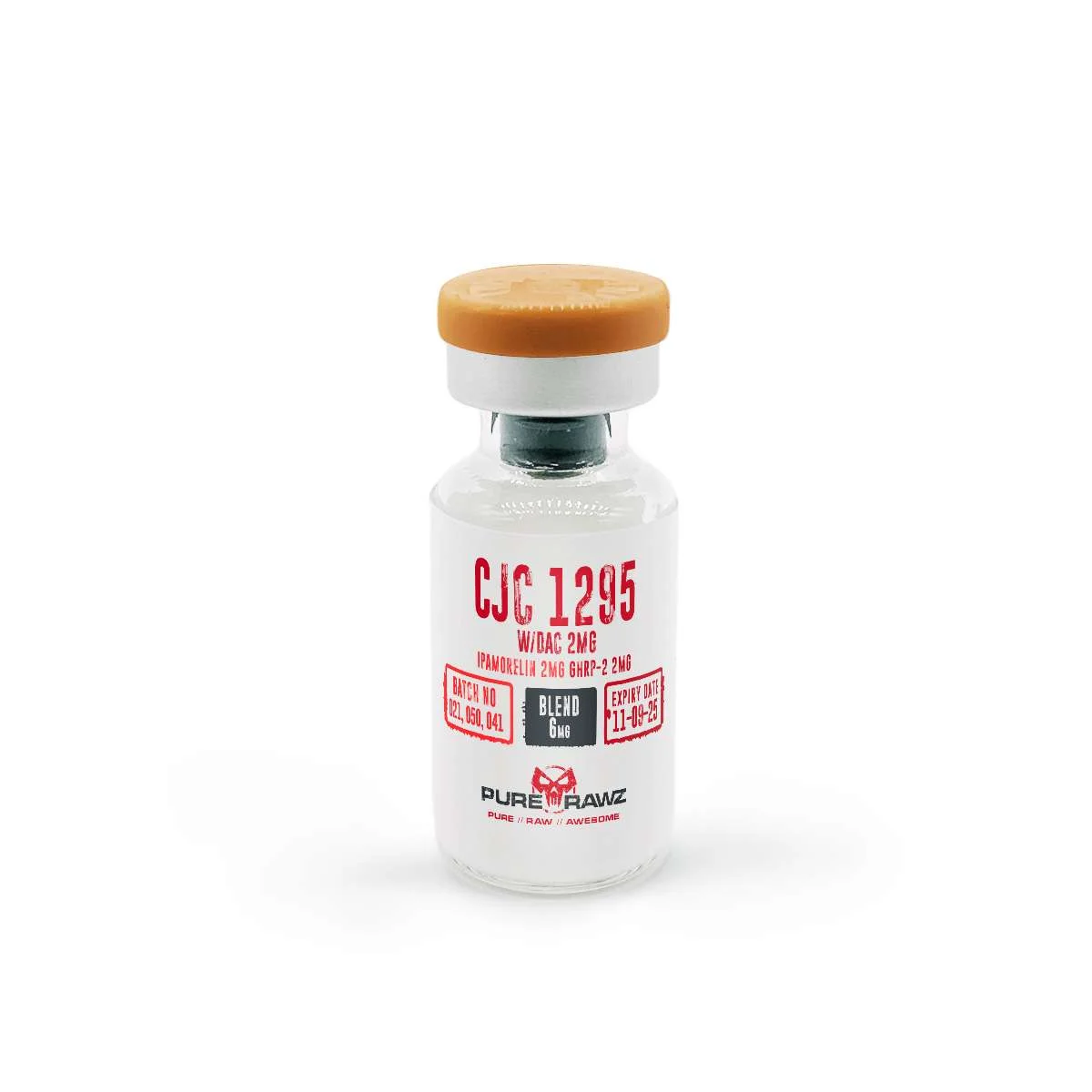
Buy Ipamorelin Research Peptide — 99% Purity, COA Verified, Selective GHRP (2026)
Researchers who want to buy ipamorelin in 2026 are working with one of the most studied and well-characterized growth hormone secretagogue peptides in the preclinical research space. Ipamorelin is a synthetic pentapeptide that selectively activates the ghrelin receptor (GHSR-1a) to stimulate growth hormone release from the anterior pituitary — without the cortisol, prolactin, or ACTH elevation that complicates interpretation in research using earlier-generation GHRPs. OfficialPureRawz supplies ipamorelin as a research-grade lyophilized powder verified at 99% purity by independent third-party HPLC and Mass Spectrometry, with a batch-specific Certificate of Analysis published on the product page. For laboratory research purposes only. Free shipping on all orders over $100.
What Is Ipamorelin?
Ipamorelin is a synthetic pentapeptide growth hormone releasing peptide (GHRP) and selective agonist of the growth hormone secretagogue receptor type 1a (GHSR-1a) — also known as the ghrelin receptor. It was developed by Novo Nordisk during the 1990s as part of a program to identify GHRPs with improved receptor selectivity over earlier compounds in the class such as GHRP-2 and GHRP-6. The five-amino-acid sequence Aib-His-D-2-Nal-D-Phe-Lys-NH₂ produces potent GH-releasing activity with a substantially cleaner hormonal side-effect profile than its predecessors — making it the most widely used GHRP in preclinical GH axis research.
What distinguishes ipamorelin from earlier GHRPs is its selectivity: while GHRP-2 and GHRP-6 significantly elevate cortisol, prolactin, and ACTH alongside GH in research models, ipamorelin produces robust GH stimulation with minimal effect on these hormones at research-relevant doses. This selectivity makes ipamorelin the preferred GHRP tool compound when researchers need to study GH axis effects in isolation without the confounding hormonal variables introduced by less selective compounds. The CAS registry number for ipamorelin is 170851-70-4, with a molecular formula of C₃₈H₄₉N₉O₅ and a molecular weight of approximately 711.9 g/mol.
Key Molecular Properties
| Property | Value |
|---|---|
| Common Name | Ipamorelin |
| Peptide Class | Growth Hormone Releasing Peptide (GHRP) |
| Sequence | Aib-His-D-2-Nal-D-Phe-Lys-NH₂ |
| CAS Number | 170851-70-4 |
| Molecular Formula | C₃₈H₄₉N₉O₅ |
| Molecular Weight | ~711.9 g/mol |
| PubChem CID | 20754357 |
| Receptor Target | GHSR-1a (Ghrelin Receptor) |
| Key Selectivity | Minimal cortisol, prolactin, ACTH elevation vs. earlier GHRPs |
| Half-Life | ~2 hours (in vivo) |
| Research Form | Lyophilized powder |
| Our Purity Standard | ≥99% (HPLC + Mass Spectrometry verified) |
Why Buy Ipamorelin From OfficialPureRawz
Ipamorelin is among the highest-volume research peptides in the market, making it simultaneously one of the most accessible and one of the most frequently adulterated. In a 2026 market that has seen significant vendor consolidation — including the closure of Peptide Sciences in March 2026 — sourcing ipamorelin from a vendor with documented independent testing standards and a verifiable operational history is more important than at any prior time.
Independent Third-Party COA — Not In-House Testing
Every batch of ipamorelin at OfficialPureRawz is tested by an independent third-party analytical laboratory using HPLC for purity quantification and Mass Spectrometry for molecular identity confirmation against the known CAS 170851-70-4 fingerprint. The COA is batch-specific and published directly on the product page before purchase — not available only on request. For ipamorelin specifically, sequence verification by MS is important given the non-standard amino acids in the peptide (Aib, D-2-Nal, D-Phe) that can be misincorporated in substandard synthesis runs and are not reliably detected by HPLC alone.
99% Purity — Batch-Specific Verification
OfficialPureRawz maintains a minimum verified purity of 99% for ipamorelin across every production batch. Ipamorelin’s non-standard amino acid composition — including the alpha-aminoisobutyric acid (Aib) N-terminal residue and two D-amino acids — makes synthesis quality more variable than for standard L-amino acid peptides. Our per-batch COA documentation captures actual test results rather than applying a catalog-level purity claim uniformly.
USA-Based Manufacturing
Ipamorelin from OfficialPureRawz is manufactured at our Knoxville, Tennessee facility. For a peptide as widely searched as ipamorelin, domestic synthesis with documented provenance is a meaningful differentiator from the large volume of imported bulk ipamorelin in the market, where synthesis quality and D-amino acid stereochemistry verification is inconsistent.
Nine Years of Documented Operation
OfficialPureRawz has operated continuously since 2017. In 2026 — when vendor closures are accelerating and demand is concentrating among fewer active suppliers — a nine-year track record with accessible customer support by phone and email represents the most meaningful external credibility signal available to researchers evaluating where to buy ipamorelin.
Legal Status: Buying Ipamorelin in 2026
Ipamorelin’s legal position as a research compound is relatively straightforward compared to peptides with competing pharmaceutical markets, but researchers should understand the full regulatory context before purchasing.
No FDA-Approved Pharmaceutical Equivalent
Unlike semaglutide — which has FDA-approved pharmaceutical counterparts in Ozempic and Wegovy — ipamorelin has no FDA-approved pharmaceutical brand name in the United States. It was investigated by Novo Nordisk in clinical development but never received FDA approval. This absence of a competing pharmaceutical market means ipamorelin does not face the same patent enforcement pressure or compounding pharmacy regulatory conflict that affects GLP-1 research peptides in 2026.
Research peptide vendors sell ipamorelin under the standard research compound framework: designated “for laboratory research use only” and “not for human consumption.” This is the legal basis under which OfficialPureRawz operates for all ipamorelin listings. No prescription is required for research-designated purchases.
WADA Classification
Ipamorelin is classified as a prohibited substance under the WADA Prohibited List in the category of Peptide Hormones, Growth Factors, Related Substances and Mimetics (S2) — the same category as other GHRPs. This prohibition applies to competitive athletes subject to anti-doping rules and is relevant context for research groups working adjacent to sport science or exercise physiology. The WADA classification does not restrict laboratory research procurement or investigation — it applies exclusively to athletic competition contexts.
FDA Scrutiny of GH-Axis Peptides
The FDA has placed growth hormone secretagogue peptides under increased scrutiny in 2026, particularly in the context of anti-aging and performance-oriented compounding and direct-to-consumer marketing. Research vendors who maintain strict research-only labeling and avoid therapeutic or performance claims operate in a distinct regulatory category from compounders and marketers making health benefit claims. OfficialPureRawz maintains research-only positioning across all ipamorelin product pages and does not make therapeutic, anti-aging, or performance claims.
Ipamorelin Research: GHRP and GH Secretagogue Pathway Overview
To understand why researchers choose to buy ipamorelin for laboratory investigation, a clear picture of the GHSR-1a pathway and ipamorelin’s specific selectivity profile is essential.
The GH Secretagogue Receptor (GHSR-1a)
The growth hormone secretagogue receptor type 1a (GHSR-1a) is a G-protein coupled receptor expressed predominantly in the anterior pituitary, hypothalamus, and additional tissues including the heart, stomach, and hippocampus. The endogenous ligand for GHSR-1a is ghrelin — the 28-amino-acid “hunger hormone” secreted primarily by gastric X/A-like cells that stimulates GH release from somatotrophs in the anterior pituitary. When activated, GHSR-1a triggers a phospholipase C-mediated signaling cascade leading to intracellular calcium mobilization, protein kinase C activation, and ultimately pulsatile GH secretion.
Synthetic GHRPs such as ipamorelin are pharmacological tools developed to activate GHSR-1a with greater potency, selectivity, and half-life than endogenous ghrelin. Ipamorelin was specifically optimized for GHSR-1a selectivity — meaning it activates the GH-releasing pathway without the off-target receptor interactions that caused cortisol and prolactin elevation with earlier GHRPs.
Mechanism of Action in Research Models
When researchers buy ipamorelin to study the GH axis, they are working with a compound documented to engage the following mechanisms:
- Selective GHSR-1a agonism: Ipamorelin binds and activates GHSR-1a with high affinity, stimulating pulsatile GH release from anterior pituitary somatotrophs in a dose-dependent manner without meaningful binding to other peptide receptors
- GH pulse amplitude enhancement: Research models show ipamorelin increases the amplitude — but not necessarily the frequency — of GH pulses, producing a physiologically mimetic secretion pattern compared to continuous GH stimulation
- IGF-1 axis activation: GH released by ipamorelin stimulation drives hepatic IGF-1 production — a downstream effect studied in growth, metabolism, and body composition research models
- Selective hormonal profile: In contrast to GHRP-2 and GHRP-6, ipamorelin does not significantly elevate cortisol, ACTH, or prolactin at doses producing equivalent GH release — the primary pharmacological feature that distinguishes it as a research tool
- Somatostatin pathway interaction: Ipamorelin’s GH-releasing effect is enhanced when endogenous somatostatin tone is low and attenuated when somatostatin tone is high — a physiologically relevant regulatory interaction studied in pituitary research models
Key Research Areas for Ipamorelin in 2026
The research applications for ipamorelin span the full breadth of GH axis biology and extend into metabolic, cardiovascular, and neurological research domains where GH and IGF-1 signaling play significant roles.
Growth Hormone Axis Pharmacology
The foundational research application for ipamorelin is as a tool compound for studying the GH secretagogue receptor pathway and pituitary somatotroph function. Research models have used ipamorelin to characterize GHSR-1a receptor kinetics, downstream signaling cascades, and the differential hormonal response profiles between GHRP compound classes. Ipamorelin’s clean selectivity makes it the preferred positive control in assays comparing GHSR-1a agonist selectivity across novel compound series. Its predictable pulsatile GH stimulation profile is also used in GH deficiency model research to investigate interventions that restore physiological GH secretion patterns.
Body Composition and Metabolic Research
Growth hormone and IGF-1 are central regulators of body composition — promoting lipolysis, protein synthesis, and lean mass accretion while opposing adipogenic signaling. Ipamorelin is used in preclinical models studying the effects of GH axis stimulation on fat mass distribution, muscle fiber cross-sectional area, insulin sensitivity, and metabolic rate. Rodent models of GH deficiency treated with ipamorelin have documented improvements in lean mass-to-fat-mass ratios, reduced adipocyte lipid accumulation, and improved glucose utilization. These body composition research applications have made ipamorelin one of the most studied GH secretagogues in metabolic biology.
Bone Density and Skeletal Research
GH and IGF-1 are among the most potent anabolic signals in bone biology — stimulating osteoblast proliferation, collagen synthesis, and mineralization while modulating osteoclast activity. Ipamorelin has been studied in preclinical models of osteoporosis, age-related bone loss, and fracture healing. Research in ovariectomized rodent models — a standard preclinical model for postmenopausal bone loss — documented significant improvements in bone mineral density, trabecular architecture, and biomechanical strength in ipamorelin-treated groups compared to controls. These skeletal research applications are particularly relevant given the lack of approved GHSR-1a agonist therapies for bone conditions.
Gastrointestinal Motility Research
GHSR-1a is expressed in the enteric nervous system and gastrointestinal tract, where ghrelin and GHRPs modulate gastric motility, gastric acid secretion, and gut transit. Ipamorelin has been studied in models of postoperative ileus and GI dysmotility — research domains where GHSR-1a agonism shows potential to restore normal motility. This GI research application is distinct from the pituitary GH axis effects and represents an independent research area enabled by GHSR-1a’s broad tissue expression.
Cardiovascular and Cardiac Research
GHSR-1a is expressed in cardiac tissue, and GH/IGF-1 signaling plays established roles in cardiac hypertrophy, contractile function, and cardioprotection. Research has investigated ipamorelin’s effects in models of cardiac ischemia, heart failure, and cardiac aging — with documented effects on cardiomyocyte survival, contractile protein expression, and mitochondrial function. The ghrelin receptor’s direct cardiac expression makes ipamorelin a research tool for studying GHSR-1a-mediated cardioprotection pathways independently of GH axis activation.
Ipamorelin + CJC-1295 Combination Research
One of the most extensively researched protocols in GH axis laboratory work involves the combination of ipamorelin (GHRP, GHSR-1a agonist) with CJC-1295 (GHRH analogue, GHRH receptor agonist). The two compounds activate GH release through distinct and complementary receptor pathways — GHSR-1a and the GHRH receptor, respectively — producing amplified GH pulse amplitude when combined compared to either compound alone. Research groups studying maximal GH axis stimulation, synergistic receptor pharmacology, or downstream IGF-1 effects commonly use the ipamorelin/CJC-1295 combination as a standard high-stimulation protocol. Both compounds are available at OfficialPureRawz.
How to Verify Ipamorelin Quality Before You Buy
Ipamorelin is among the most frequently underdosed or misrepresented research peptides due to its high market demand and the synthesis complexity introduced by its non-standard amino acid composition. The following checklist covers every dimension a researcher should confirm before completing an ipamorelin purchase.
- Batch-specific COA published directly on the product page — accessible before purchase without contacting support
- Testing laboratory is a named, verifiable independent facility — not in-house
- COA confirms HPLC purity testing with result ≥99%
- COA confirms Mass Spectrometry identity confirmation against ipamorelin CAS 170851-70-4 and MW ~711.9 g/mol
- COA test date is within the last 12 months
- COA batch number matches the specific product being sold
- Vendor has verifiable US physical address
- Vendor maintains strict research-only marketing language — zero therapeutic or performance claims
- Vendor has been operating for 2+ years with documented history
- Multiple payment options available
- Customer support reachable by phone and email
- Product clearly labeled as lyophilized powder for research use only
Why D-Amino Acid Stereochemistry Matters for Ipamorelin
Ipamorelin’s sequence contains two D-amino acid residues — D-2-Naphthylalanine (D-2-Nal) and D-Phenylalanine (D-Phe). These D-amino acids are essential for GHSR-1a binding affinity and proteolytic stability. Substitution with the corresponding L-amino acids produces a peptide with substantially reduced receptor binding and diminished biological activity in research models. HPLC cannot distinguish D- from L-amino acid epimers — Mass Spectrometry combined with chiral analysis or the correct molecular weight confirmation is the appropriate analytical method. When reviewing a COA before purchasing ipamorelin, confirm the MS data reflects the correct MW of 711.9 g/mol for the D-amino acid containing form.
Ipamorelin Pricing: What Research-Grade Should Cost
Ipamorelin is one of the more affordably priced research peptides due to its relatively small molecular size, but legitimate synthesis of the non-standard amino acid sequence with verified D-amino acid stereochemistry and independent analytical testing still sets a meaningful price floor below which research-grade quality cannot be maintained.
| Vial Size | Legitimate Price Range | Price Per mg | Notes |
|---|---|---|---|
| 2mg vial | $15 – $35 | $7.50 – $17.50/mg | Entry size for targeted research protocols |
| 5mg vial | $25 – $55 | $5 – $11/mg | Most common research size |
| 10mg vial | $40 – $90 | $4 – $9/mg | Best value for extended or combination protocols |
| Below $2/mg | ⚠ Red Flag | Quality concern | Cannot support D-amino acid synthesis and independent testing costs |
OfficialPureRawz offers ipamorelin starting at $22.99. Apply code BRAWN20 for 20% off, or SETH for up to 25% off. Free shipping on all orders over $100. Cryptocurrency payment receives an additional 15% discount.
Why Ipamorelin Requires Careful Price Evaluation
Ipamorelin is among the most searched research peptides online, creating a large market of price-sensitive buyers and an incentive for vendors to offer low-cost products that cannot be produced at verified research-grade quality at those price points. D-amino acid synthesis requires specialized reagents and more rigorous analytical verification than standard L-amino acid peptide synthesis. Vendors offering ipamorelin at prices significantly below market minimums are not absorbing a margin loss — they are compromising on synthesis quality, stereochemistry verification, or independent testing.
Reconstitution and Storage After You Buy Ipamorelin
Research ipamorelin is supplied as lyophilized (freeze-dried) powder. Correct storage and reconstitution procedures are essential for maintaining compound integrity and obtaining reproducible research results.
Storage of Lyophilized Ipamorelin
- Long-term storage: -20°C (standard freezer). Stable for up to 2 years when sealed, protected from light and humidity. Store in the original sealed vial until ready to reconstitute.
- Short-term storage: 4°C (refrigerator). Acceptable for up to 6 months when sealed. Suitable for active research periods with planned use within that window.
- Light: Store away from direct light. The D-2-Naphthylalanine residue is particularly sensitive to UV-induced photodegradation.
- Humidity: Maintain in a dry environment. Moisture ingress initiates hydrolytic degradation at peptide bonds even in sealed vials with compromised packaging.
Reconstitution Protocol
Ipamorelin lyophilized powder must be reconstituted with bacteriostatic water (BAC water containing 0.9% benzyl alcohol) before use in liquid-phase research protocols.
- Allow the sealed ipamorelin vial to equilibrate to room temperature before opening
- Clean the rubber stopper with 70% isopropyl alcohol and allow to dry completely
- Draw the desired volume of bacteriostatic water into a sterile syringe
- Insert the needle through the rubber stopper and inject BAC water slowly along the glass wall — not directly onto the lyophilized cake
- Do not shake vigorously — gently swirl or roll the vial until the powder is fully dissolved
- The reconstituted solution should be clear and colorless. Any cloudiness or particulate matter indicates a preparation problem.
- Label the vial with the reconstitution date and store at 4°C
Post-Reconstitution Stability
Reconstituted ipamorelin solution should be stored at 4°C (refrigerator) and used within 28 days of reconstitution. Never freeze reconstituted ipamorelin solution — repeated freeze-thaw cycles degrade peptide integrity and can cause aggregation. For research protocols requiring extended study durations, prepare multiple separate vials reconstituted as needed rather than a single large preparation at study initiation.
Red Flags When Buying Ipamorelin Online
Ipamorelin’s position as one of the highest-volume research peptides makes it a primary target for quality-compromised vendors and misleading marketing. Apply these specific red flags before any purchase.
Performance, Anti-Aging, or Health Benefit Claims
Any vendor making muscle growth, fat loss, anti-aging, sleep improvement, or any other therapeutic or performance outcome claims about their ipamorelin for sale is operating outside the appropriate legal framework for research compound sales. This is the single most important red flag. Ipamorelin’s WADA prohibited status and its popular reputation in non-research contexts creates a market of vendors making performance claims to attract non-researcher buyers — claims that disqualify them as legitimate research sources and signal elevated regulatory compliance risk.
No Independent COA or Only In-House Testing
For a peptide with D-amino acid residues that are biologically critical and cannot be detected as incorrect by visual inspection, independent Mass Spectrometry confirmation of the correct molecular structure is the only meaningful quality assurance a buyer can obtain. Vendors who offer only in-house testing, generic catalog-level COAs, or no COA at all for ipamorelin should not be sourced for research purposes regardless of price.
No Mention of D-Amino Acid Composition
Product descriptions for research ipamorelin should reference the D-2-Naphthylalanine and D-Phenylalanine residues in the sequence, or at minimum identify the compound by its full sequence (Aib-His-D-2-Nal-D-Phe-Lys-NH₂) and correct CAS number (170851-70-4). Vendors whose listings do not reference the D-amino acid composition or CAS number may not be aware of — or may not be verifying — the stereochemical requirements of the compound they are selling.
Price Significantly Below Market
As detailed in the pricing section, ipamorelin priced substantially below legitimate market rates cannot be produced at verified research-grade quality with proper D-amino acid synthesis and independent analytical testing at those price points. This applies particularly to 2mg vials offered below $8–10 total, where the economics of legitimate production make quality claims implausible.
Vague or Absent Disclaimers
Every legitimate ipamorelin research listing should clearly state: “For research use only. Not for human or animal consumption. Not FDA-approved. Not a dietary supplement.” Absence of these specific disclaimers is a signal of non-compliance with the research compound framework.
Ipamorelin vs Other GHRP and GH Secretagogue Research Compounds
Researchers studying the GH axis have a range of secretagogue tool compounds available. Understanding ipamorelin’s position relative to other GHRPs and GHRH analogues helps inform protocol design and compound selection.
| Compound | Class | Receptor Target | Key Research Profile | Available at OfficialPureRawz |
|---|---|---|---|---|
| Ipamorelin | GHRP | GHSR-1a | Selective GH release, minimal cortisol/prolactin | ✓ Yes |
| CJC-1295 | GHRH Analogue | GHRH Receptor | Extended-acting GH axis stimulation, synergistic with GHRPs | ✓ Yes |
| GHRP-2 | GHRP | GHSR-1a | Potent GH release, moderate cortisol/prolactin elevation | ✓ Yes |
| GHRP-6 | GHRP | GHSR-1a | Strong GH release, significant appetite stimulation, cortisol elevation | ✓ Yes |
| MK-677 (Ibutamoren) | Non-peptide GHS | GHSR-1a | Oral GH secretagogue, extended half-life, appetite effects | ✓ Yes |
| Sermorelin | GHRH Analogue | GHRH Receptor | Shorter-acting GHRH, pituitary GH axis research | ✓ Yes |
Ipamorelin vs GHRP-2 for Research
GHRP-2 is a more potent GHSR-1a agonist than ipamorelin by some measures, but produces significant cortisol and prolactin elevation at GH-stimulating doses — creating confounding hormonal variables in research models. Ipamorelin is the preferred tool compound when researchers need to study GH axis effects in isolation without these off-target hormonal signals. For research specifically studying the cortisol or prolactin responses to GHSR-1a activation, GHRP-2 provides the reference compound. For clean GH axis pharmacology, ipamorelin is the standard choice.
Ipamorelin vs MK-677 for Research
MK-677 (Ibutamoren) is a non-peptide, orally bioavailable GHSR-1a agonist with a substantially longer half-life (~24 hours) compared to ipamorelin (~2 hours). MK-677 is the appropriate tool compound for research requiring oral administration or sustained continuous GHSR-1a activation. Ipamorelin is preferred when researchers need a short-acting, injectable GHRP that produces physiological pulsatile GH release patterns rather than the sustained elevation produced by MK-677. Both are available at OfficialPureRawz.
Ipamorelin + CJC-1295 Combination
The ipamorelin/CJC-1295 combination is among the most documented dual-compound GH research protocols available. Ipamorelin activates GHSR-1a; CJC-1295 activates the GHRH receptor. The complementary mechanisms produce amplified GH pulse amplitude compared to either compound alone — making this combination the standard high-stimulation GH axis protocol in preclinical research. Both compounds in research-grade lyophilized form are available at OfficialPureRawz, allowing researchers to procure both from a single verified COA source.
Ipamorelin Supply Landscape in 2026
The research peptide market for ipamorelin in 2026 is shaped by the same vendor consolidation dynamics affecting the broader market, with some GHRP-specific factors worth understanding.
Vendor Consolidation and Demand Concentration
The closure of Peptide Sciences in March 2026 removed one of the primary ipamorelin suppliers from the US market. Ipamorelin was among the highest-volume SKUs at that vendor, and a large portion of displaced demand has concentrated among remaining active suppliers. As with TB-500 and other high-volume research peptides, this consolidation has increased the proportion of demand captured by lower-quality new entrants — making independent COA verification more important than at any prior time for ipamorelin procurement specifically.
Anti-Aging and Longevity Clinic Market Pressure
Ipamorelin occupies an unusual position in the 2026 market in that it has historically been used in a compounding pharmacy and longevity clinic context alongside its research peptide channel. FDA scrutiny of GH secretagogue compounding and prescribing — which intensified in 2023–2024 — has constrained the clinic-based channel. This has increased demand pressure on the research peptide vendor market as researchers and individuals seek reliable ipamorelin supply from legitimate research sources. Researchers purchasing ipamorelin should confirm their vendor maintains strict research-only positioning to ensure they are sourcing from a compliant research compound operation rather than a clinic-adjacent vendor operating under increased regulatory pressure.
Research Demand Remains Active
Laboratory demand for ipamorelin remains strong and growing in 2026 — driven by expanding research interest in bone biology, cardiac protection, GI motility, and the ipamorelin/CJC-1295 combination protocols described in this guide. OfficialPureRawz maintains ipamorelin stock with reliable availability for research procurement, with consistent batch documentation and independent COA publication across all production runs.
Frequently Asked Questions: Buy Ipamorelin
Summary: Buy Ipamorelin Research Peptide at OfficialPureRawz
OfficialPureRawz offers research-grade ipamorelin — the most selective and widely used GHRP in the GH axis research space — with independent third-party COA documentation, verified 99% purity, D-amino acid sequence confirmation by Mass Spectrometry, USA-based manufacturing, and a nine-year operational history that makes it one of the most credible options for ipamorelin research procurement in the consolidated 2026 market.
Buy ipamorelin at OfficialPureRawz starting at $22.99. Use code BRAWN20 for 20% off or SETH for up to 25% off. Free shipping on all orders over $100. Strict research-only positioning maintained across all product pages and marketing materials. For laboratory and research purposes only.
Related GH Axis and Peptide Research Compounds at OfficialPureRawz
- CJC-1295 — GHRH analogue, synergistic with ipamorelin for amplified GH pulse research
- GHRP-2 — potent GHRP reference compound, higher cortisol/prolactin profile vs. ipamorelin
- GHRP-6 — GHRP with strong appetite stimulation, ghrelin-pathway hunger research
- MK-677 (Ibutamoren) — oral non-peptide GHSR-1a agonist, sustained GH elevation research
- Sermorelin — shorter-acting GHRH analogue, pituitary GH axis research
- TB-500 — Thymosin Beta-4 fragment, tissue repair and actin dynamics research
- BPC-157 — GI and connective tissue repair peptide, frequently used alongside GH axis research protocols
Related Products for CJC-1295 With DAC + Ipamorelin + GHRP-2 Blend
If you are looking to buy CJC-1295 With DAC + Ipamorelin + GHRP-2 Blend, you may also be interested in advanced growth hormone research peptides used for recovery studies, muscle development protocols, sleep research, and performance-focused laboratory applications. Explore these related products below.

Reviews
There are no reviews yet.