
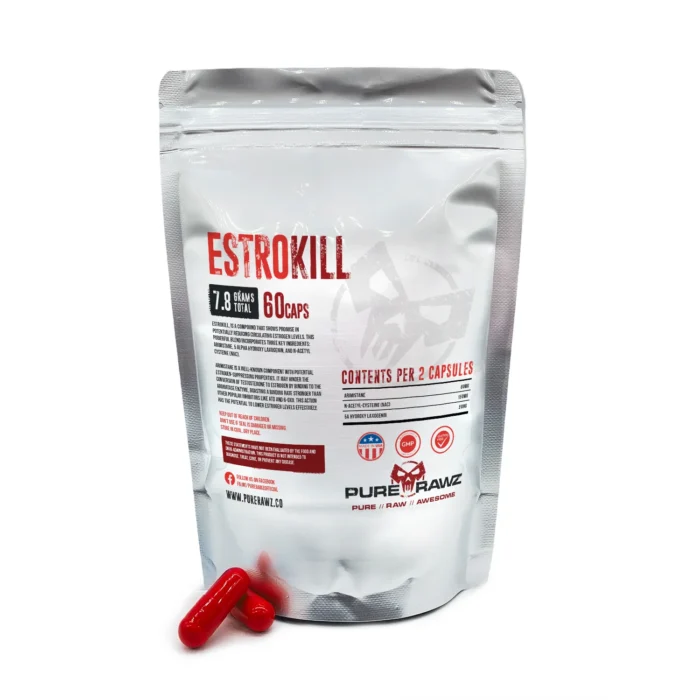
Estrokill Overview
Estrokill is a multi-compound research chemical formulation. It is examined in laboratory environments for its potential interactions with hormonal signaling pathways, enzymatic modulation, and intracellular regulatory networks.
The formulation contains botanical extracts and phytochemical compounds. Researchers investigate these compounds in biochemical and molecular biology studies.
In experimental laboratory contexts, this compound mixture is studied to analyze enzyme-related signaling pathways and steroidal compound interactions. It is also examined for cellular regulatory mechanisms within controlled experimental models.
Estrokill is categorized as a laboratory chemical preparation. It is intended strictly for investigational and analytical research purposes.
Chemical and Molecular Properties
| Property | Description |
| Compound Name | Estrokill |
| Category | Multi-compound research chemical formulation |
| Chemical Type | Investigational phytochemical and steroidal signaling modulators |
| Molecular Components | Indole-3-Carbinol (I3C), Diindolylmethane (DIM), Calcium D-Glucarate, Chrysin, Grape Seed Extract, Piperine |
| Chemical Class | Botanical extracts, amino acid derivatives, and bile acid laboratory chemicals |
| Lab Safety Required | Handle as a laboratory chemical reagent and follow standard laboratory safety protocols |
| Storage Conditions | Store in a cool, dry environment away from direct light |
| Status | Not for human or animal consumption |
| Regulatory Status | Not approved by regulatory authorities |
The formulation includes compounds such as Indole-3-Carbinol, DIM, and Calcium D-Glucarate. These are frequently examined in laboratory research settings for their biochemical properties related to enzyme signaling pathways and cellular regulatory mechanisms.
Working Mechanism of Estrokill
Below is the proposed mechanism currently being investigated in controlled laboratory models.
Phytochemical Hormonal Pathway Investigation
Certain compounds in this formulation, such as Indole-3-Carbinol (I3C) and Diindolylmethane (DIM), are investigated as research chemicals in biochemical research. They are studied for their interaction with molecular signaling pathways related to steroidal compound metabolism.
In laboratory experiments, researchers analyze how these compounds interact with intracellular receptor systems and transcription-related signaling processes.
These experimental investigations allow scientists to observe phytochemical interactions within cellular regulatory networks.
Enzyme Modulation Studies
Compounds such as Calcium D-Glucarate are examined as laboratory chemicals in biochemical research due to their potential interaction with enzyme-mediated metabolic pathways.
In vitro studies may analyze:
- enzymatic pathway regulation
- glucuronidation-related biochemical processes
- intracellular detoxification signaling pathways
- molecular substrate – enzyme interaction mechanisms
These investigations allow researchers to analyze enzyme-related biochemical responses in controlled laboratory environments.
Flavonoid Molecular Interaction Analysis
Certain plant-derived compounds such as Chrysin are categorized as flavonoid research chemicals examined in biochemical and molecular biology research.
Laboratory investigations may explore:
- flavonoid-related molecular signaling pathways
- enzyme interaction mechanisms
- intracellular protein-binding responses
- regulatory biochemical networks
These experimental studies help scientists understand flavonoid molecular interactions in controlled research models.
Botanical Antioxidant Mechanism Studies
Plant-derived compounds such as Grape Seed Extract are commonly investigated as laboratory chemicals in molecular research due to their polyphenol-related biochemical characteristics.
In experimental laboratory environments, researchers may analyze:
- polyphenol-related antioxidant signaling pathways
- cellular membrane interaction mechanisms
- intracellular oxidative stress markers
- phytochemical – protein interaction networks
These studies enable scientists to examine the biochemical properties of plant-derived molecular compounds.
Bioavailability and Molecular Transport Research
Certain compounds such as Piperine are studied as research chemicals in biochemical research for their interaction with molecular transport mechanisms.
Laboratory investigations may analyze:
- intracellular compound transport pathways
- enzyme-mediated molecular absorption models
- biochemical permeability signaling mechanisms
- cellular metabolic regulatory networks
Such studies contribute to understanding how phytochemical compounds interact with cellular transport systems.
Multi-Compound Biochemical Interaction Analysis
The combination of phytochemical compounds and botanical extracts in this research chemical formulation enables scientists to analyze multiple biochemical pathways simultaneously in controlled laboratory experiments.
Investigational studies may explore:
- steroidal compound signaling pathways
- enzyme-mediated biochemical modulation
- molecular regulatory responses
- intracellular detoxification signaling networks
These experimental models allow researchers to examine complex biochemical interactions within cellular systems.
Estrokill Research Applications
The primary investigational applications for Estrokill include:
Cellular Studies
Researchers may analyze intracellular signaling networks, enzymatic regulation pathways, and molecular regulatory responses in experimental cellular models.
Molecular Biology Research
Scientists may conduct receptor-binding analysis, transcription signaling studies, and intracellular pathway investigations using this laboratory chemical formulation.
Biochemistry Research
The compound mixture may be used as a research chemical probe to investigate enzyme activity, phytochemical molecular interactions, and intracellular signaling responses.
Investigational Status
Estrokill is considered an investigational research chemical formulation and is not approved for therapeutic or clinical use.
Buy Estrokill from Purerawz for Research Use?
Research organizations and laboratory professionals can obtain Estrokill through our online platform for investigational laboratory studies.
At Purerawz, this formulation is provided exclusively as a research chemical preparation intended for scientific evaluation and controlled experimental analysis. We supply independently tested research compounds along with comprehensive Certificates of Analysis (COA) to support transparency and reliability in laboratory research applications.
Disclaimer
The information presented is intended strictly for educational and scientific reference. All procedures involving these laboratory chemicals should be conducted in suitable laboratory environments in accordance with institutional research policies and safety guidelines.
By placing an order through our website, you agree to our Terms and Conditions. If there is any issue with the product received, please contact our support team at support@purerawz.co
ATTENTION: The products mentioned are laboratory chemicals intended solely for research purposes. They must not be used for human or animal consumption.
Reference Links
Indole-3-Carbinol biochemical research studies – PubChem / PubMed https://pubchem.ncbi.nlm.nih.gov/compound/3712
Diindolylmethane molecular signaling research https://pubmed.ncbi.nlm.nih.gov/16813651
Calcium D-Glucarate and enzyme-related metabolic pathways https://pubmed.ncbi.nlm.nih.gov/11276200
Reviews
There are no reviews yet.